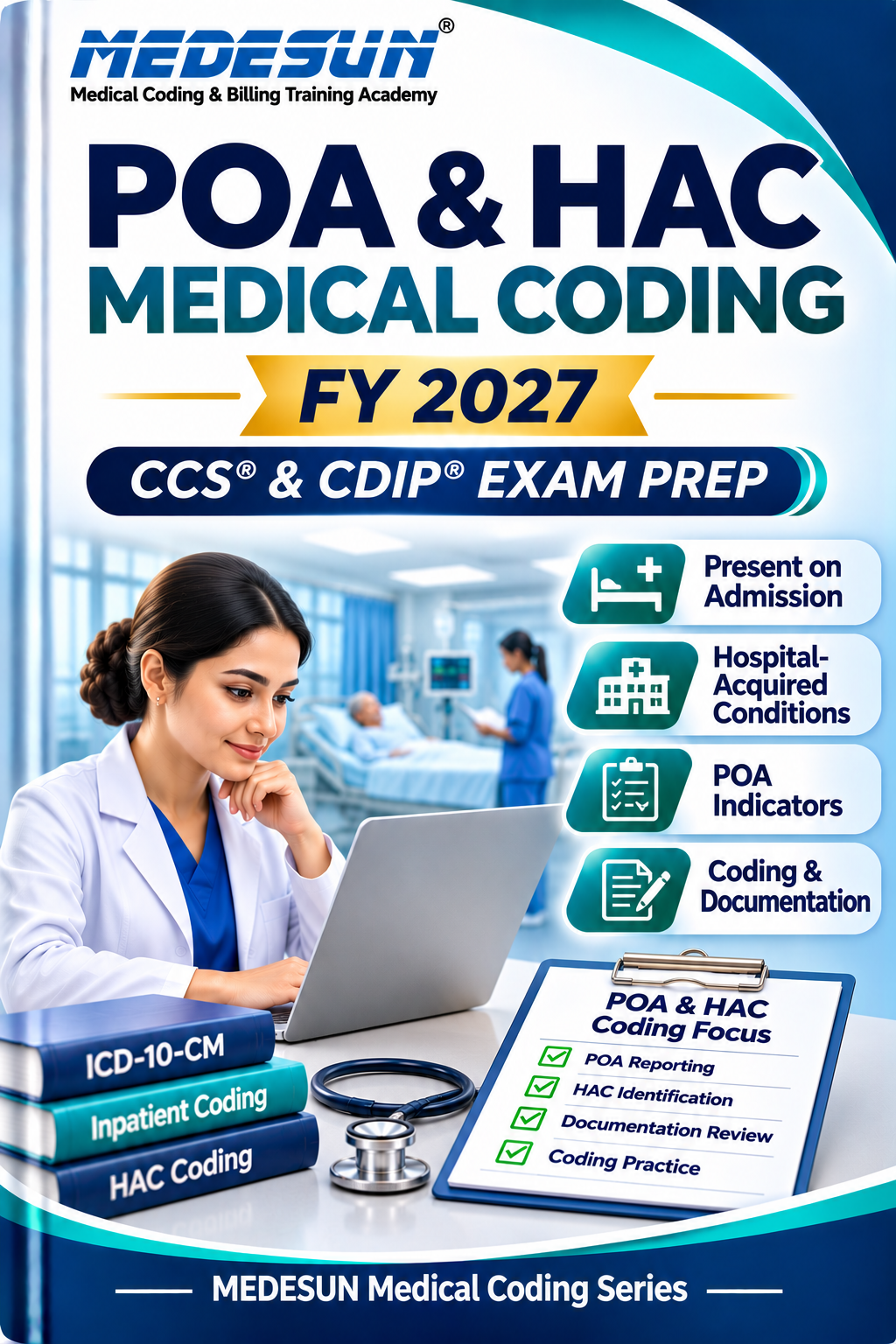
Strengthen inpatient coding decisions with a focused guide to Present on Admission (POA) indicators, Hospital-Acquired Conditions (HACs), diagnosis documentation and CCS®/CDIP® exam preparation. Learn how the two reporting concepts relate without treating them as interchangeable.
Distinguish Y, N, U, W and exempt assignments based on documentation and applicable coding guidance.
1
Admission Timeline Review
Determine whether a diagnosis was present at the time of the inpatient admission order, including conditions recognized later.
2
Hospital-Acquired Conditions
Understand HAC reporting concepts and why a POA value alone does not determine whether a condition falls under a specific CMS HAC program.
3
Inpatient Documentation
Review physician notes, discharge summaries, clinical evidence and the need for clarification when documentation conflicts.
4
HAC, POA & Quality Reporting
Differentiate diagnosis coding, POA reporting, HAC payment policy and hospital quality measures rather than conflating them.
5
CCS / CDIP Case Practice
Build case-based reasoning for inpatient code assignment, compliant documentation review, sequencing and audit checks.
6
FY 2027 coding note: Use the official ICD-10-CM guidelines, current POA-exempt list and CMS HAC policy documents. POA reporting and HAC payment/quality programs involve different criteria; an N indicator does not automatically mean a condition is a reportable HAC.
Learn beyond the book
Build Stronger Inpatient Coding & CDI Skills
Use this textbook to improve practical understanding of POA and HAC concepts, and explore MEDESUN’s medical coding and CCS-focused training programs.