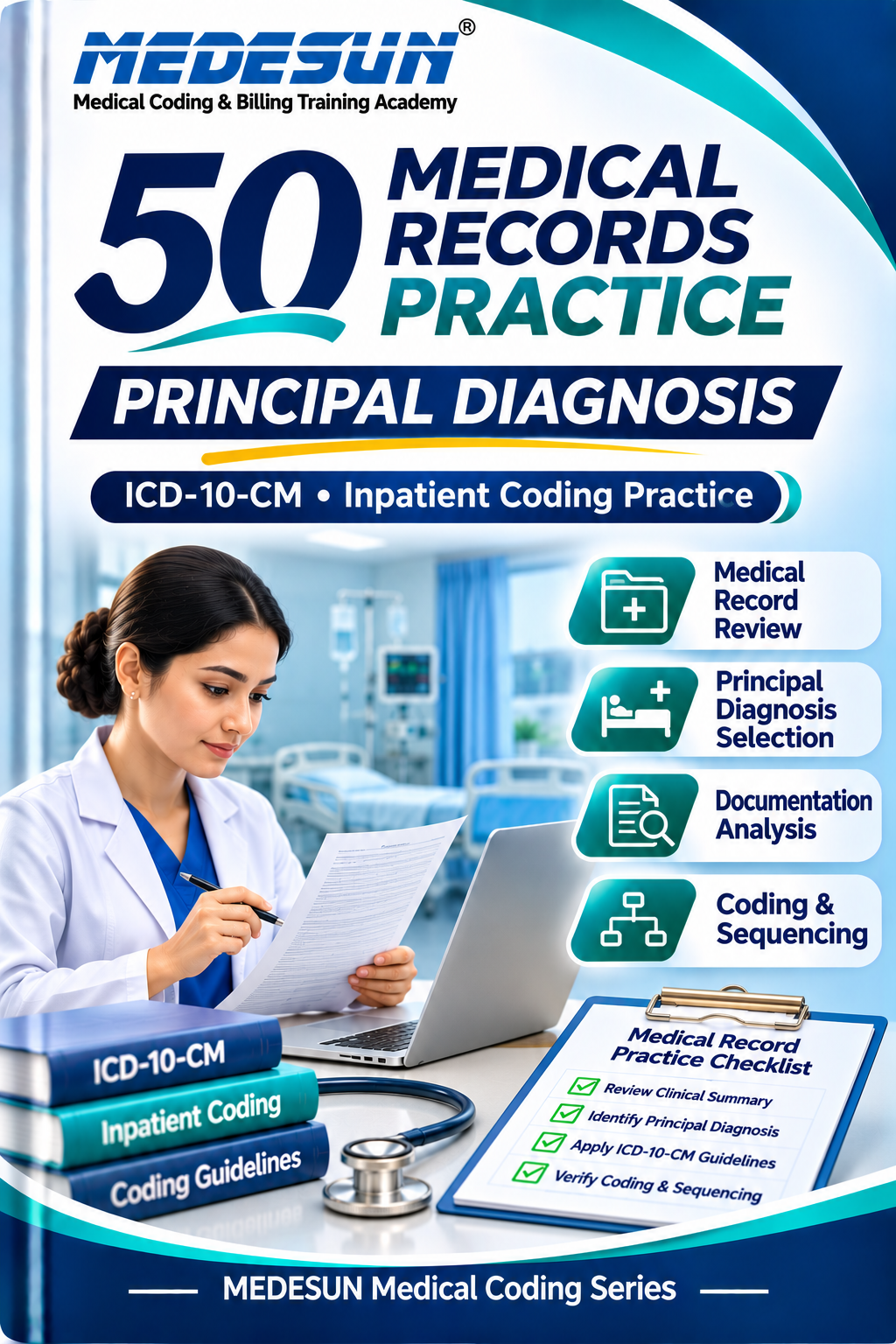
Build practical principal diagnosis selection skills using a guide centered on 50 medical records. Work through clinical documentation, diagnosis identification, ICD-10-CM guideline application and sequencing decisions.
Hospital coding professionals refreshing principal diagnosis logic
Coding auditors and clinical documentation specialists
Learning guide
Practise Principal Diagnosis Selection with Medical Records
Medical Record Review
Read admission notes, discharge summaries and clinical findings to identify information relevant to diagnosis selection.
1
Principal Diagnosis Identification
Apply the condition-after-study principle when determining which diagnosis chiefly occasioned the inpatient admission.
2
ICD-10-CM Code Selection
Use the Alphabetic Index and Tabular List, paying attention to instructional notes, specificity and current guidelines.
3
Diagnosis Sequencing Decisions
Distinguish the principal diagnosis from secondary conditions and review chapter-specific sequencing instructions.
4
Conflicting or Incomplete Documentation
Recognize when clinical information is insufficient or contradictory and when a compliant provider query may be needed.
5
Case-Based Accuracy Checks
Review documentation support, coding assumptions, medical necessity context and the final sequencing rationale.
6
Important coding note: In inpatient coding, the principal diagnosis is the condition established after study to be chiefly responsible for the admission. Code selection and sequencing depend on the full record, current official guidelines and setting-specific rules. Do not treat an exercise answer as a substitute for official coding instructions.
Learn beyond the book
Improve Your Inpatient Coding Skills with Practical Cases
Supplement individual study with MEDESUN instructor-led ICD-10-CM and CCS coding training, including clinical documentation review and coding practice.